Diagnosis before scan
A scan records tooth surfaces and bite position, but it does not replace examination of gum health, joints, roots, bone or facial relationships.
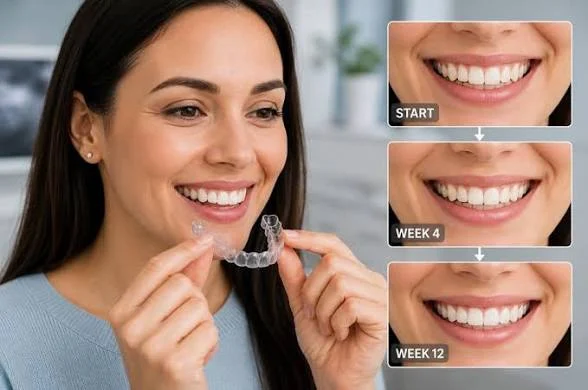
Invisalign uses a sequence of custom clear aligners to move teeth according to a digital treatment plan. The aligners are removable, but the treatment is not passive.
A typical pathway includes a clinical assessment, digital records, treatment-plan review, delivery of aligners, monitoring visits, possible attachments or interproximal reduction, refinements when indicated and retainers after active treatment. Each step exists for a reason.
Ask to see how the proposed plan addresses both alignment and bite. Confirm expected daily wear, monitoring intervals, what is included if refinements are needed and the retention plan before treatment begins.
A scan records tooth surfaces and bite position, but it does not replace examination of gum health, joints, roots, bone or facial relationships.
Invisalign Canada states that people typically wear aligners 20 to 22 hours daily. Instructions for an individual patient may differ.
Completion means stable planned tooth positions plus a retention strategy, not simply reaching the last numbered aligner.
Good orthodontic decisions begin with diagnosis, not a product preference. The central question is not whether Invisalign is popular. It is whether the planned tooth movements, bite goals, health of the teeth and gums, and the patient's ability to follow the plan make removable aligners a sound choice.
A simulation is a plan, not a guarantee. Treatment time, aligner changes, attachment design, elastic wear and the need for additional aligners can change according to progress and biological response.
The aligners are clear and usually much less noticeable than braces, but attachments, elastics and the aligner edges can still be visible.
No. Invisalign can treat a wide range of problems, but case complexity, patient wear and the clinician's treatment goals determine suitability.
Begin with an assessment that reviews your concern, dental health, records, treatment options, responsibilities and retention rather than beginning with a scan alone.
External sources can change. Verify current regulatory, professional, manufacturer and local information at the linked publisher; these sources do not replace an individualized examination.
Presented by Blue Bird Dental, Hillside Dental and River City Dental. Last reviewed September 5, 2026. This content is educational and is not a substitute for an individualized examination, diagnosis or treatment recommendation. For pain, swelling, trauma, breathing difficulty, uncontrolled bleeding, infection or an appliance causing injury, contact a local dentist, treating provider or emergency service directly.